Blogs

Weaving Change

By day, I spend my time thinking about strategic planning and organizational change, but by night, I’m weaving kitchen towels. Recently, I started thinking about a new weaving project and similarities in these two seemingly different parts of my life collided. It occurred to me that weaving is a good metaphor for the planning and change process.

Investing in the future of fish and wildlife

For the past few years I've had the great good fortune to work with the Association of Fish and Wildlife Agencies' North American Conservation Education Strategy. For the past six years or so, conservation educators from fish and wildlife agencies around the country have worked to develop tools to support high quality conservation education in everything from field investigations to outdoor skills to connecting children and families with the outdoors (check out www.fishwildlife.org, focus area Conservation Education).

New Choirs

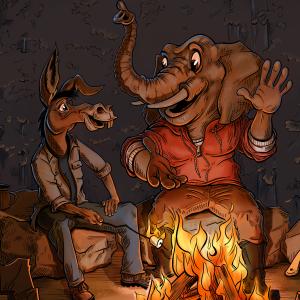
Those of us who work in fish and wildlife conservation tend to hang around with people who are as passionate about the resource as we are. We attend meetings with each other and reinforce to each other the importance of what we do. We assume most people know about the history of wildlife conservation in the United States and that they've heard of Aldo Leopold. We're all members of the same choir. You know what? Most of the world doesn't think the way we do, or know anything about most of that stuff - they don't belong to our choir. Hard to imagine, I know. But true.

Cold War to Global Warming: What gets kids fired up, unplugged and outside?

I grew up in the 1960s in a small town in Kansas surrounded by wheat fields and a Cold War mentality. The theme was “We’re all gonna’ die” — if not in a nuclear holocaust, then because of mass extinction, communism, overpopulation or a race riot. Someone needed to address some really big problems. The 1970s hires in fish and wildlife agencies came fast on the heels of major environmental and social legislation to get at everything that was going wrong with the world.

Photo of Gwen White with Jacques Cousteau's daughter-in-law and grandaughter

If you don't connect with peoples' hearts, what you communicate to their heads doesn't matter

Have you ever tried convincing someone of something they didn't want to do by persuading them with facts? How did that work for you? No? I didn't think so.

American lotus flower

What do you want to achieve? No, really?

I conferred recently with a couple of knowledgeable and accomplished scientists about a conference at which they hoped to reach a key audience. They had a wealth of information and details they hoped communicate with other decision-making professionals - literally reams of valuable information and science-based recommendations.

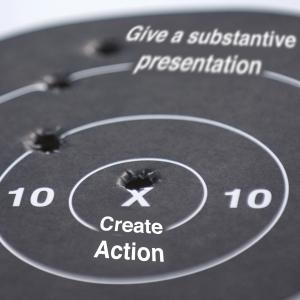
One of the first questions I asked was "what do you hope to achieve and, specifically, what do you want people to do as a result of attending your meeting."

The answer - "our goal is to deliver a substantive presentation."

illustration of a target with "create action" at bullseye

Distraction Dilemmas - keeping people focused in meetings

At a recent staff meeting we discussed the challenge of keeping meeting participants engaged and mentally "present" when smartphones and other work or personal situations are vying for their attention. No doubt you've experienced people reading email, sending text messages, and taking calls during meetings. I admit I'm guilty of that. It's a fact of life that budget and staff reductions mean a few people are doing the work of many, and focusing on any particular topic is a luxury, no matter how important the topic in question.

Photo of man using a smartphone during a meeting

Connections to Nature - in Clever Disguise

When you work for a conservation communications firm where a lot of your peers have the “thrill of the hunt” running through their veins, it's easy to feel intimidated when stories about the great outdoors are told.

old glass medicine bottles full of flowers (Photo Credit: Lyle Daniel)
Sarah Hughes preparing to kayak Bear Glacier in Alaska.
Opossum (Photo Credit: USFWS)

Open for Questions: America’s Great Outdoors

In a live broadcast from The White House, Secretary of the Interior Ken Salazar and Secretary of Agriculture Tom Vilsack discussed the America's Great Outdoors Initiative, specifically mentioning a DJ Case-produced web site - YouthGo.gov

Open for Questions:  America’s Great Outdoors
YouthGo.gov screen shot
Student with lobster

History of civilization in seven words

I sat on the edge of my seat during a keynote address by Clay Shirky, NYU professor and author of Here Comes Everybody and Cognitive Surplus, at DrupalCon Chicago last week.

His talk centered largely on a theme from a quote by Mark Smith, Research Sociologist at Microsoft, who said that the history of civilization could be summed up in seven words: "More people pooling resources in new ways."

Photo of Clay Shirky, organizing without organizations.
Illustration of a steam engine with oars

Pages

Subscribe to RSS - blogs